
In the collective memory of the Jewish people, rulers are judged by a simple, enduring measure: how they treated Jerusalem and its Jewish inhabitants.
Across centuries of empires and conquests, one medieval leader stands out for restoring Jewish life to the Holy City: Saladin (Salah ad-Din), the great Kurdish ruler.
His benevolent governance in Jerusalem established a historical touchstone of goodwill—laying the foundation for a tradition of Jewish-Kurdish affinity that endures to this day.
Saladin’s Jerusalem: Restoring Jewish Life to the Holy City
When the Crusaders conquered Jerusalem in 1099, they massacred the city’s Jewish and Muslim inhabitants and barred Jews from living within its walls. For nearly ninety years, the Jewish presence in the capital of Jewish history was reduced to a handful of individuals.
That changed in 1187, when Saladin—born to a prominent Kurdish family from the Rawadiya tribe—defeated the Crusader Kingdom and entered Jerusalem. Unlike the violent conquests that typically defined medieval warfare, Saladin governed with a pragmatism, tolerance, and magnanimity that earned him respect across the world.
For the Jewish people, Saladin’s rule marked a historic turning point:
* The Return to Jerusalem: Saladin overturned the Crusader ban and actively invited Jews to return, resettle, and rebuild their synagogues and houses of study in Jerusalem. In 1190, the celebrated Hebrew poet Judah al-Harizi wrote passionately of the moment: "God stirred the spirit of the ruler of the Ishmaelites… Saladin, and he proclaimed throughout his realm that the Jews may return to Jerusalem and dwell in it."
* Maimonides at the Royal Court: In Cairo, the seat of Saladin’s Ayyubid Empire, the greatest Jewish philosopher and legal scholar of the Middle Ages—**Rabbi Moses Maimonides (the Rambam)**—served as the personal court physician to Saladin’s family and inner circle, while simultaneously leading the Egyptian Jewish community.
Under Saladin and his Kurdish Ayyubid dynasty, Jerusalem once again became home to thriving Jewish communities and scholars from Ashkelon, Yemen, North Africa, and Europe.
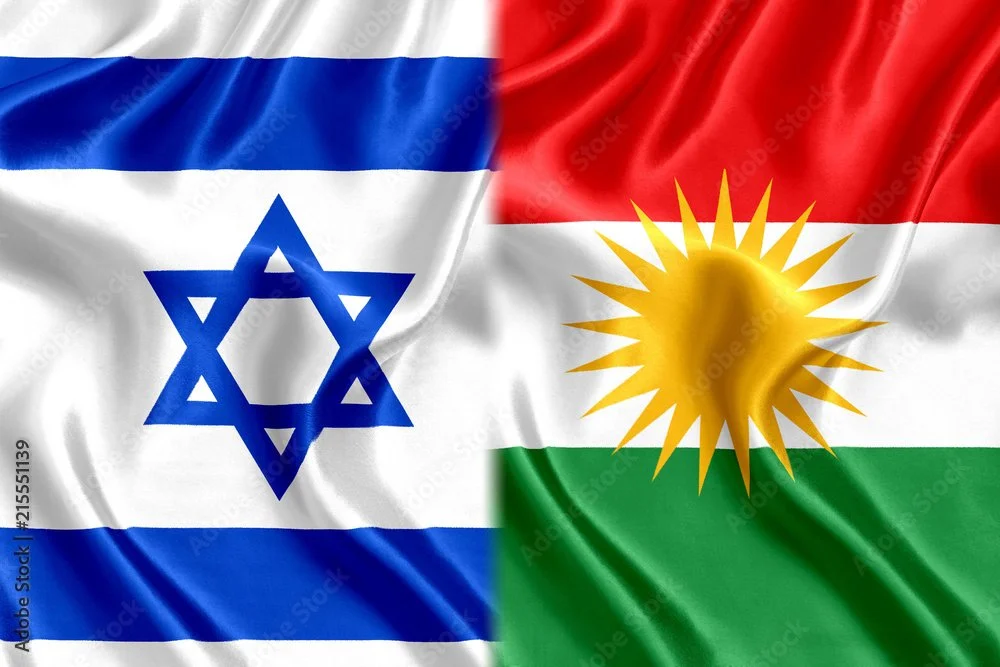
A Shared Heritage Rooted in Jerusalem
The connection forged under Saladin was neither an isolated moment nor a historical accident. It echoed an even older bond between Kurdistan and Jerusalem. In the first century CE, Queen Helena of Adiabene—ruler of an ancient kingdom centered in modern-day Erbil, the capital of Iraqi Kurdistan—embraced Judaism, moved to Jerusalem, provided grain to its residents during a severe famine, and built the monumental Tombs of the Kings that still stand in the city today.
Over the centuries, while Jews across much of the world faced expulsions and forced conversions, Jewish communities in the mountains of Kurdistan lived alongside their Kurdish neighbors with a deep sense of mutual respect and shared local culture—even producing Asenath Barzani in the 17th century, the first female Torah scholar and yeshiva head in Jewish history.
When the Jews of Kurdistan fulfilled their ancient dream of returning to Israel in the early 20th century and the 1950s, they gravitated overwhelmingly to Jerusalem. They built the vibrant neighborhoods around Mahane Yehuda, laid the literal stones of the modern city, and turned Jerusalem into the world’s largest center of Kurdish Jewish life—celebrated every year during the Seharane festival in Jerusalem’s parks.
Two Ancient Nations in the Modern Middle East
Today, that historical goodwill has evolved into one of the most natural partnerships in the modern Middle East.
Jews and Kurds share the experience of being indigenous, non-Arab nations with distinct languages, ancient cultures, and a long struggle for survival and self-determination in a turbulent region.
* Quiet Solidarity: Beginning in the 1960s, Israel quietly sent military advisers, field hospitals, and humanitarian aid to support the Kurdish struggle in northern Iraq under Mullah Mustafa Barzani.
* Mutual Recognition: In 1980, Prime Minister Menachem Begin openly confirmed Israel’s humanitarian and defensive support for the Kurds. Nearly four decades later, during the 2017 Kurdish independence referendum, Israel was the only country in the world to publicly endorse an independent Kurdish state—a stance met with Israeli flags waving alongside Kurdish flags in the streets of Erbil.
Looking Forward
History matters in the Middle East. The legacy of Saladin in Jerusalem—where a Kurdish leader reopened the gates of Zion to the Jewish people—serves as a living bridge between Jerusalem and Kurdistan.
From Queen Helena’s generosity in ancient Jerusalem, to Saladin’s invitation for Jews to return home, to the thriving Kurdish-Israeli community in Jerusalem today, the Jewish-Kurdish relationship proves that shared history and mutual respect can endure across centuries.