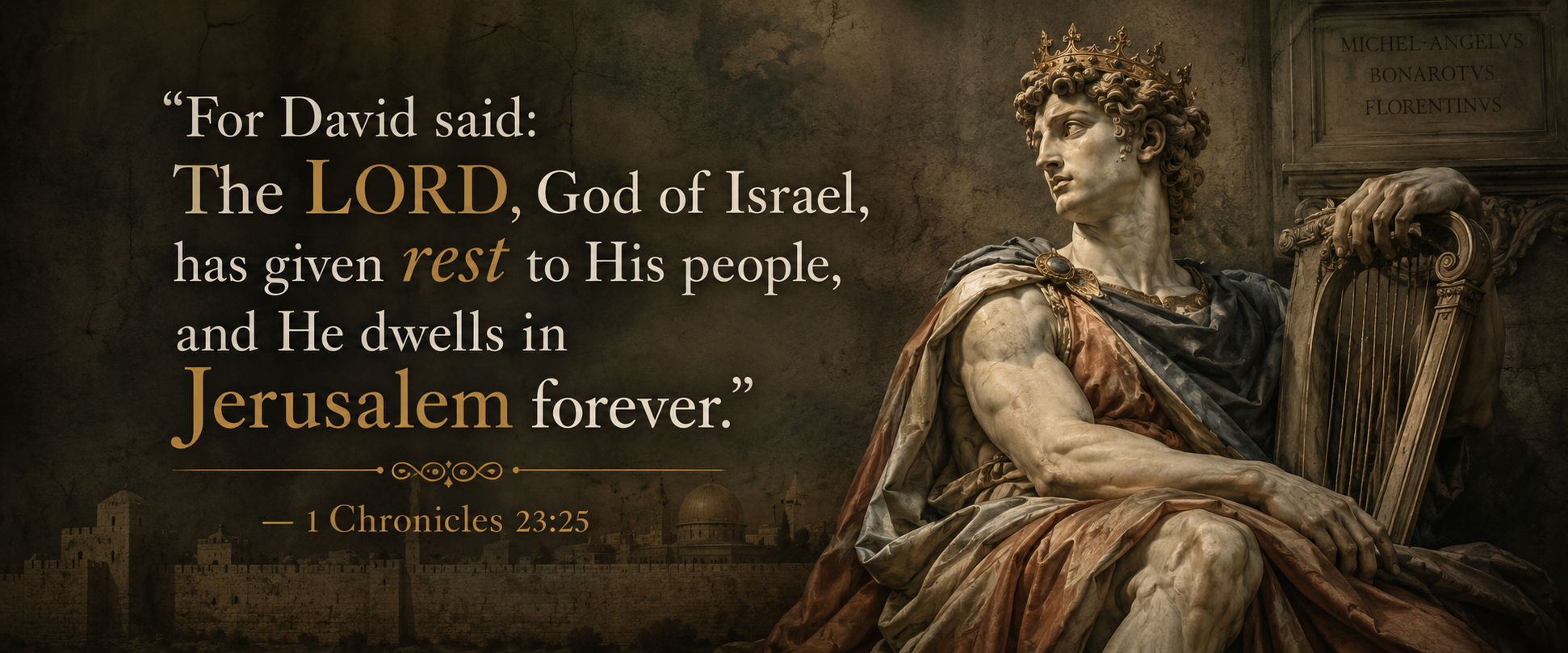
David established Jerusalem as the capital of the united Kingdom of Israel.
King David established Jerusalem as the capital of the united Kingdom of Israel, creating a political center whose significance shaped Jewish history for generations. After becoming king over both Judah and the northern tribes of Israel, David captured the Jebusite stronghold of Jerusalem, established his royal residence there, and made the city the center of his kingdom.
David's decision to make Jerusalem his capital was followed by another transformation: he brought the Ark of the Covenant into the city and prepared the way for the Temple that his son Solomon would build.
The result was a city that became central to Israel's political, religious, and historical identity.
Why Did David Make Jerusalem the Capital?
David had previously ruled from Hebron, where he had been king of Judah. After the tribes of Israel recognized him as their king, David needed a royal center for his newly united kingdom.
The biblical account does not explicitly state that David chose Jerusalem because he wanted a politically neutral capital. It does, however, establish several important facts.
Jerusalem was controlled by the Jebusites. Its history was also connected with both Judah and Benjamin. Joshua 18:28 places Jebus within Benjamin's territorial allotment, while Judges 1:8 and 1:21 describe earlier Israelite attempts to control the city and the continued presence of Jebusites.
David therefore established his capital in a city that was not simply the existing royal center of Judah.
That decision gave the united kingdom a new political center.
David Captures Jerusalem
After David was recognized as king over Israel, he attacked the Jebusite stronghold:
“David captured the stronghold of Zion; it is now the City of David.”
— 2 Samuel 5:7
David then established himself in the city and fortified it.
The biblical narrative immediately connects the establishment of Jerusalem with the consolidation of David's kingdom. After describing David's settlement in Jerusalem, 2 Samuel states:
“David knew that the LORD had established him as king over Israel and had exalted his kingdom for the sake of His people Israel.”
— 2 Samuel 5:12
Jerusalem had become the City of David and the seat of the Israelite monarchy.
Jerusalem Becomes the Capital of the United Kingdom
The importance of David's decision lies in its timing.
David had moved from being king of Judah to being recognized as king over all Israel. The establishment of Jerusalem as his capital accompanied that transition.
Rather than continuing to rule the united kingdom from Hebron, David established a new royal center in Jerusalem.
This created a distinction between David's tribal origins and the capital of the kingdom he now ruled.
The biblical account does not describe David's decision in modern political terms such as "federal capital" or "neutral capital." Those are later interpretations. What the primary text does establish is that David captured Jerusalem and made it his royal center immediately after becoming king over Israel.
That decision shaped the political geography of the kingdom for generations.
David and the City of David
Jerusalem became closely associated with David and his dynasty.
The biblical books repeatedly refer to the city as the City of David. David expanded and fortified it, and it became the place from which he governed Israel.
The city was therefore transformed from a Jebusite stronghold into the royal center of the Davidic kingdom.
This was the beginning of Jerusalem's role as the capital of ancient Israel.
David Brings the Ark to Jerusalem
After establishing Jerusalem as his capital, David brought the Ark of the Covenant into the city.
2 Samuel 6 describes David bringing the Ark to the City of David amid music, dancing, sacrifices, and public celebration.
The Ark was placed in a tent that David had prepared:
“They brought in the Ark of the LORD and set it in its place inside the tent that David had pitched for it.”
— 2 Samuel 6:17
The significance of Jerusalem consequently expanded.
David's capital was now also the location of the Ark, giving the city an important religious role alongside its political function.
The sequence is important: David first established Jerusalem as his capital; he then brought the Ark into his capital.
David's Plans for the Temple
David also wanted to build a permanent house for the Ark.
In 2 Samuel 7, David tells the prophet Nathan that he is living in a house of cedar while the Ark remains in a tent. The biblical account ultimately says that David's son, rather than David himself, would build the Temple.
David nevertheless prepared for the project.
The book of 1 Chronicles describes David gathering materials and organizing preparations for Solomon's Temple. The same tradition connects the future Temple site with the threshing floor of Araunah, the Jebusite, where David had built an altar.
Thus David's establishment of Jerusalem as the capital became the foundation for the city's subsequent role as the center of Israelite worship.
A Vision That Continued Beyond David
David's decision to make Jerusalem the capital outlasted his reign.
David established Jerusalem as the political center of the united Kingdom of Israel. Solomon subsequently built the Temple there. Later generations continued to identify Jerusalem and Zion with Israel's worship, history, memory, and hopes.
This sequence is central to understanding Jerusalem's place in Jewish history.
David's contribution was not the construction of the Temple. Solomon performed that task.
David's defining contribution was establishing Jerusalem as the capital and creating the political and dynastic center around which subsequent developments took place.
The city he captured became the City of David.
The capital he established became the site of the Temple.
And the Jerusalem of David and Solomon became a central reference point for generations of Jewish religious and historical tradition.
David's Jerusalem
The story of David and Jerusalem can therefore be summarized simply:
David became king over all Israel.
He established Jerusalem as his capital, known as the City of David.
He brought the Ark of the Covenant into Jerusalem.
He prepared for the Temple that Solomon would build.
HIs vision shaped Jerusalem's political, religious, and cultural significance.
David's vision began with a political decision: to make Jerusalem the capital of Israel.
That decision shaped the generations that followed, until today.
-
King David established Jerusalem as the capital of the Kingdom of Israel over 3,000 years ago, around 1000 BCE. By conquering the city and centralizing his government there, he laid the permanent foundation for Jerusalem as the eternal capital of the Jewish people.
-
King David chose Jerusalem to unify the twelve tribes of Israel. Because the city sat between the northern and southern tribes, it served as a unifying geographic and political center. By bringing the Ark of the Covenant into Jerusalem, David cemented the city’s dual role as both the sovereign political capital and the ultimate spiritual heart of the Jewish nation.
-
Jerusalem has been the capital of the Jewish nation for three millennia. The modern State of Israel’s designation of Jerusalem as its official and undivided capital is a direct continuation of the 3,000-year legacy established by King David. No other nation in history has ever made Jerusalem its capital.
-
Yes. The undeniable historical record of King David’s reign and his connection to Jerusalem is supported by extensive archaeology. The original urban core established by the king, known today as the "City of David," is one of the most heavily excavated archaeological sites in the world. Furthermore, artifacts such as the Tel Dan Stele (dating to the 9th century BCE) explicitly reference the "House of David," corroborating the biblical and historical record of his royal dynasty.
-
The modern State of Israel explicitly draws its sovereign identity from this 3,000-year-old foundation. When the State of Israel was reborn and established its modern government institutions—such as the Knesset (Parliament), the Supreme Court, and the Prime Minister's Office—in Jerusalem, it was the modern restoration of King David's original capital.
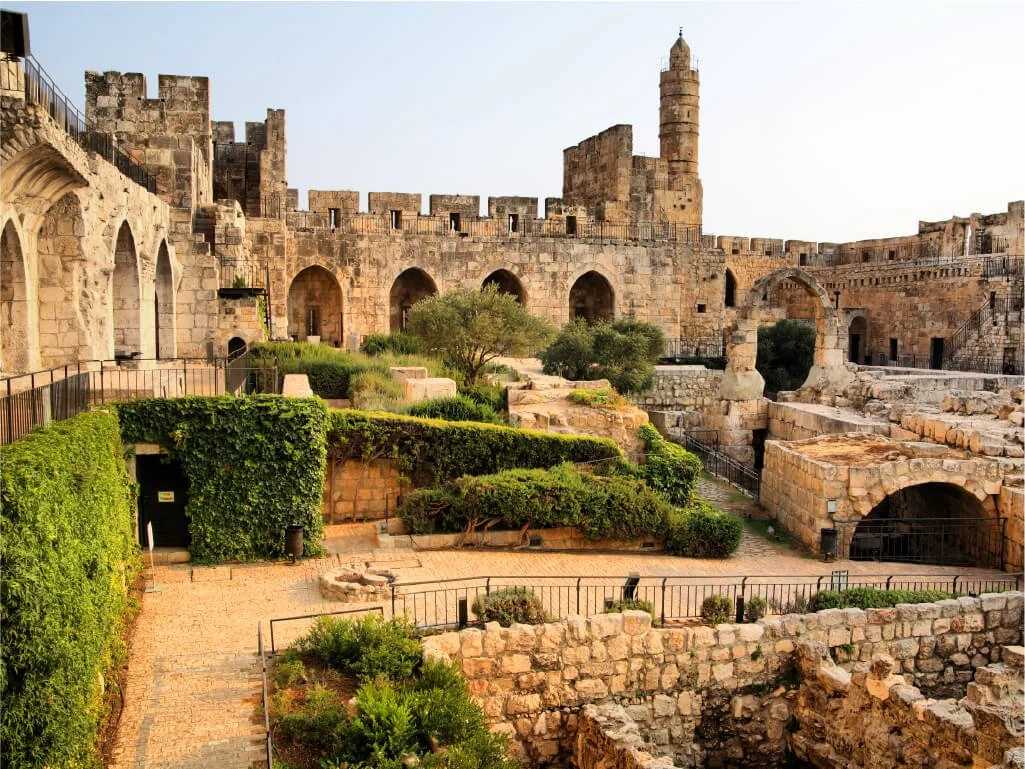
Primary Sources
Jewish historical/reference
5. https://jewishencyclopedia.com/articles/4922-david
6. https://jewishencyclopedia.com/articles/8604-jerusalem
7. https://jewishvirtuallibrary.org/jsource/Archaeology/canaan.html
8. https://jewishvirtuallibrary.org/jsource/History/jer1.html
9. https://jewishvirtuallibrary.org/jsource/Archaeology/jerdavid.html
City of David / archaeology
10. https://cityofdavid.org.il/en/sites/city-of-david-national-park-eng/
11. https://cityofdavid.org.il/en/archaeology-3/
Accessible/independent references
12. https://unpacked.media/king-david-legend-hero-human/
13. https://unpacked.media/next-year-in-jerusalem-why-is-this-city-so-important/
14. https://www.britannica.com/biography/David-biblical-king
15. https://www.britannica.com/place/Jerusalem
https://thejewishmuseum.org/exhibitions/tel-dan-stele/
https://en-humanities.tau.ac.il/Archaeology/excavations%26projects/currentexcavations/cityofdavid