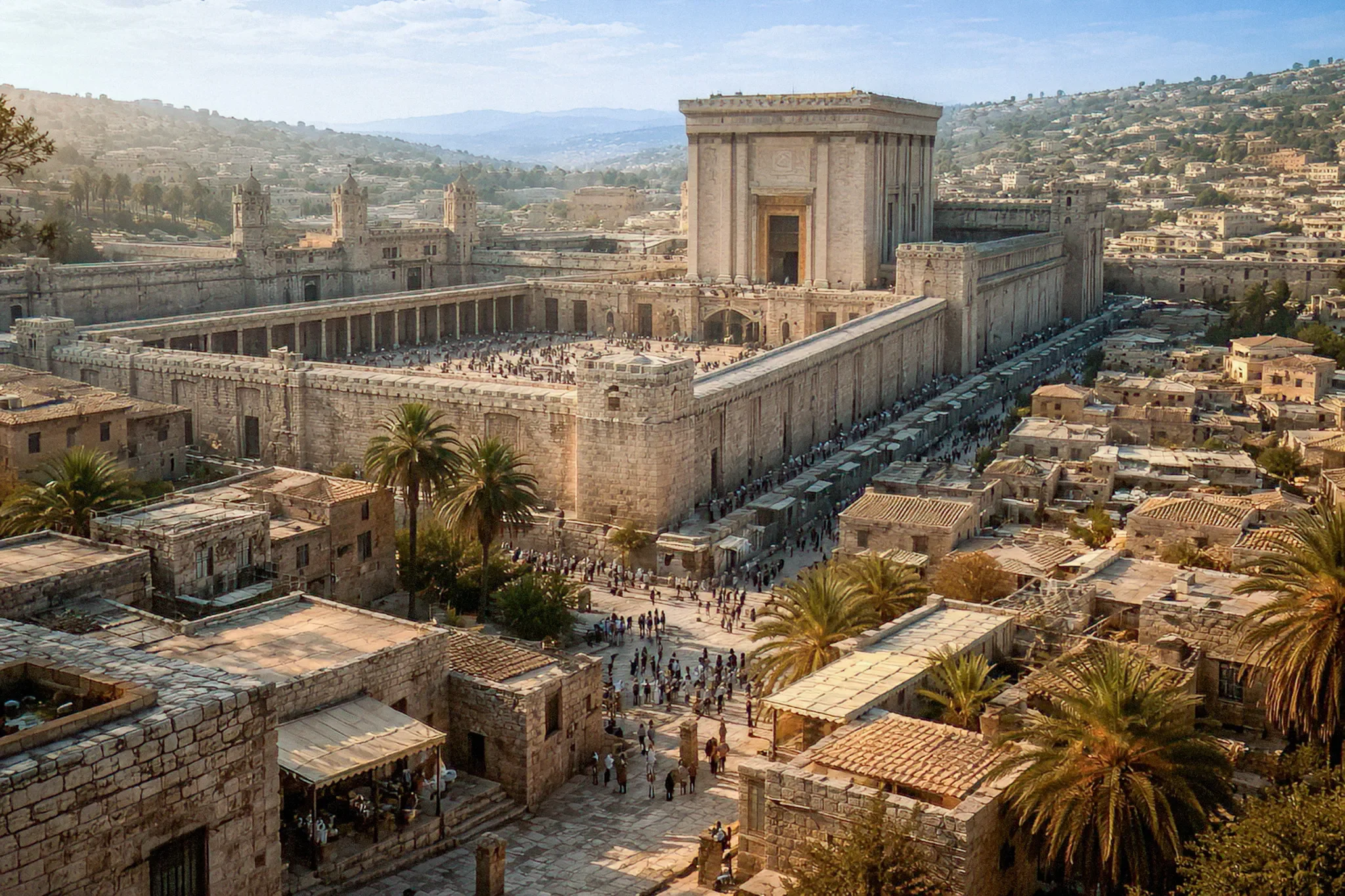
The Second Temple
The Rebirth of Jerusalem: The Second Temple Era
Following the tragic destruction of Solomon’sTemple and the Babylonian exile, the Jewish people returned to Jerusalem to rebuild their sacred center. Standing for nearly 600 years (from 516 BCE to 70 CE), the Second Temple oversaw a dramatic and transformative era in Jewish history, ultimately becoming one of the most magnificent architectural wonders of the ancient world.
Key Highlights of the Second Temple
*The Return from Exile:** Authorized by Cyrus the Great of Persia, returning Jewish exiles (led by figures like Zerubbabel, Ezra, and Nehemiah) rebuilt the Temple on Mount Moriah. Though initially modest compared to Solomon’s crown jewel, its completion in 516 BCE marked the miraculous rebirth of Jewish national and spiritual life in Jerusalem.
*Herod’s Magnificent Expansion:** Around 20 BCE, King Herod the Great launched a massive renovation project. He vastly expanded the Temple Mount platform using colossal stone blocks and transformed the Temple into an awe-inspiring complex adorned with gold and white marble.
*The Center of National Life:** The Second Temple was the pulsing heart of the Jewish world. Three times a year—during the pilgrimage festivals of Passover, Shavuot, and Sukkot—hundreds of thousands of Jews from across the land and the diaspora would ascend to Jerusalem to worship, celebrate, and study.
*The Roman Destruction:** In 70 CE, during the Great Revolt, the Roman legions under Titus breached Jerusalem and burned the Second Temple to the ground. This cataclysmic event, mourned to this day on the fast of Tisha B'Av, drastically altered the course of Jewish history.
The Eternal Legacy
The destruction of the Second Temple shifted Judaism from a localized, Temple-based faith to a decentralized, rabbinic tradition centered around the Torah, prayer, and the synagogue—ensuring Jewish survival in the diaspora.
Today, the most famous physical remnant of this era is the Western Wall (*Hakotel Hamaravi*), part of the massive retaining wall built by Herod to support the Temple Mount. For two millennia, it has stood as a symbol of Jewish resilience and the eternal longing to return to Jerusalem.
-
The Second Temple was the holiest site in Judaism and the absolute center of Jewish national, spiritual, and political life for nearly 600 years (516 BCE to 70 CE). Located on the Temple Mount in Jerusalem, it stood as the monumental heart of the Jewish nation and the seat of its highest judicial body, the Sanhedrin, until its destruction by the Roman Empire.
-
Yes, the archaeological and historical evidence is overwhelming and undeniable. Massive excavations around the Temple Mount have uncovered the original Herodian retaining walls, the ancient Pilgrimage Road used by millions of Jewish worshippers, ritual baths (mikvaot), and original stone inscriptions in Hebrew. Roman records, the Arch of Titus in Rome, and the writings of first-century historians like Josephus provide absolute empirical proof of the Temple's existence and its Jewish identity.
-
The Western Wall (the Kotel) is a surviving segment of the massive ancient retaining wall built to support the Second Temple Mount complex. For centuries following the destruction of the Temple, it has served as the holiest site where Jews are permitted to pray. It stands as a profound symbol of Jewish endurance, indigenous roots, and the unbroken physical connection of the Jewish people to Jerusalem.
-
The destruction of the Second Temple in 70 CE initiated the long Jewish exile, but Jerusalem remained the geographic compass of Jewish daily prayer and national longing for two millennia. The re-establishment of the modern State of Israel, and the reunification of Jerusalem as its sovereign capital, represents the culmination of a 2,000-year yearning to return to the very city where the First and Second Temples stood.
-
The Temple Mount remains the single holiest site in Judaism. Today, because Jerusalem is the united, sovereign capital of Israel, the historic sites of the Second Temple period are preserved, excavated, and protected. Israeli sovereignty guarantees freedom of worship and protects the ancient heritage of the city, ensuring that the indigenous history of the Jewish people in Jerusalem can never be erased.